The Past – How It All Began!
It is often claimed that our Jiu-Jitsu (Ju-Jutsu) dates to the time of the samurai. However, this is incorrect, because during the samurai era, these warriors had entirely different means of fighting. Imagine a samurai engaging in hand-to-hand combat while wearing heavy and complex battle gear.
In fact, Jiu-Jitsu emerged around the years 1900–1910, when the first Japanese masters came to Europe and later went on to South America to lead a better and safer life there.
Even the word “Jiu-Jitsu” (or “Ju-Jutsu”) originated here in the West to give a name to this “flexible” or “adaptive” martial art. At that time, the Chinese were already in Europe with their Kung Fu (or Gung Fu), and very few people could recognize or understand the difference. The first Savate (or Chausson) Kickboxing schools emerged in Marseille from the Chinese martial arts, where many nobles trained to defend themselves against street attacks.
When the Japanese arrived, people wanted to adopt this martial art, which later became known as the “gentle art” (Braz. Arte Suave). Interestingly, this martial art appealed to women far more than other arts such as Boxing, Savate, or Wrestling, which were also widely practiced in the West.
After swords were laid down in Japan and numerous martial arts (Bujutsu) were banned, most of these schools (Ryu) disappeared and found no other way but to reinvent themselves in the West. This is how the martial art of Jiu-Jitsu was reborn.
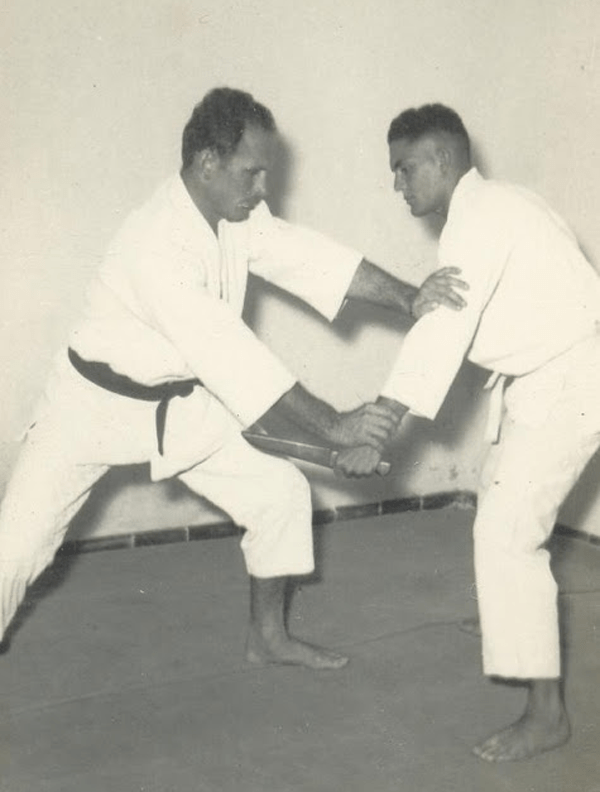
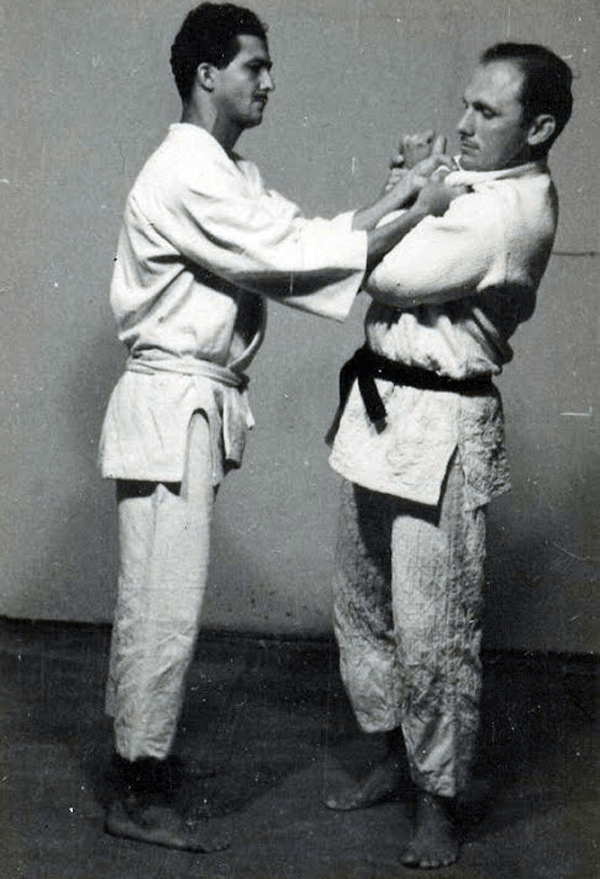
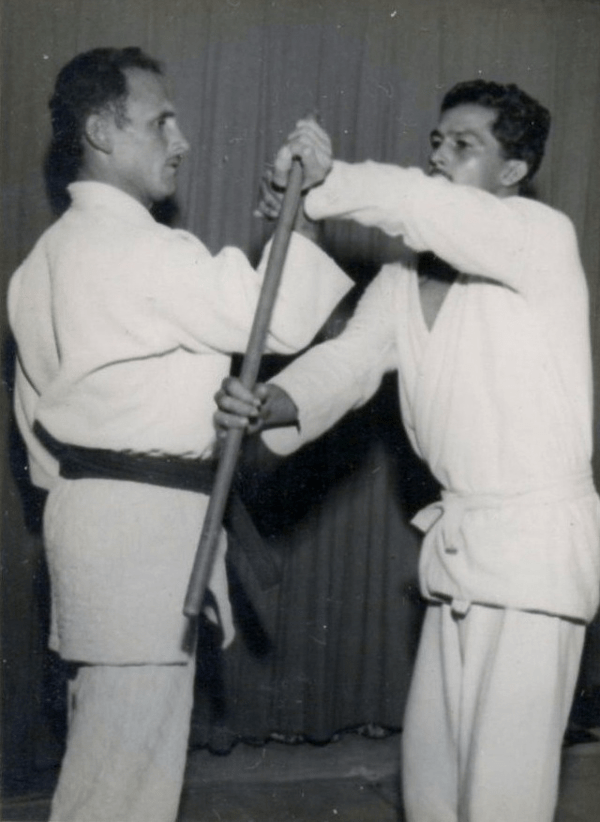
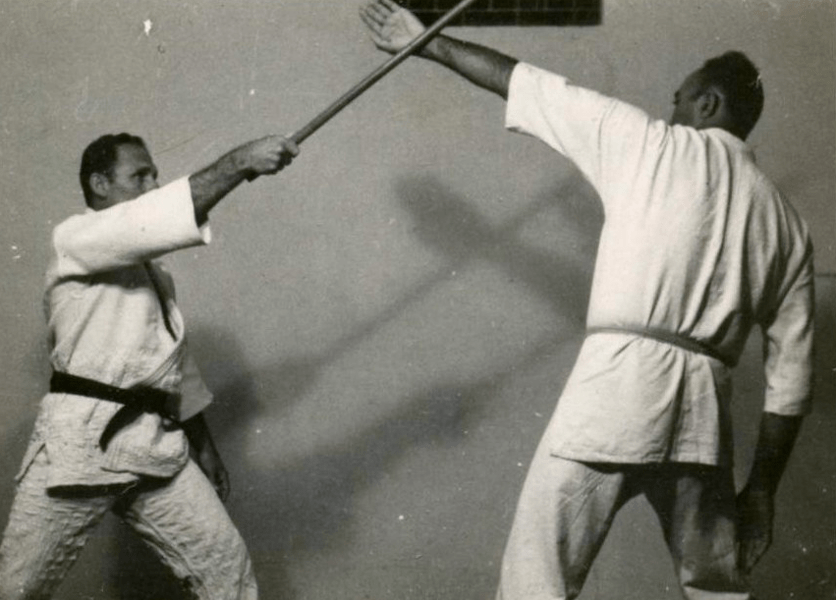
Numerous young masters came to us with the hope of passing on their valuable knowledge. Often, it was even the sons of the old grandmasters who came to Europe. Interest in them as combat experts grew significantly, a fact that was quickly recognized throughout Asia. Thus, the young masters—who often had little skill or teaching experience—found good jobs as instructors with the police or as a sort of “modern 007 butler” for someone who could afford it.
After Jiu-Jitsu had established itself in Europe, some of them moved on to South America, where there was a thriving circus and combat show culture and they were well paid as combat experts. In Brazil, numerous circuses were on the road, many of them run by Europeans—particularly Italians, Spaniards, and Portuguese—who had settled there. Often, they did not stay only in Brazil but traveled throughout South America; Argentina and Mexico were also popular destinations.
Spain had provided a new home for various Japanese Jiu-Jitsu masters, including the famous Mitsuyo Maeda, who earned his nickname “Conde Koma” in Seville while traveling as a fighter, among other things, to earn money. Maeda was not the first Japanese person to travel to Brazil, but he was certainly one of the first to teach Jiu-Jitsu to the locals there, not just to his fellow countrymen.
Maeda is said to have arrived in Belém do Pará around 1914. Together with his friends, who were also young Jiu-Jitsu experts from his homeland, he traveled through South America and later settled there permanently.
Together with his closest friend Satake, who went by the nickname “Black Belly,” he is also said to have founded the first Jiu-Jitsu schools. It was said that the older Satake was an excellent teacher of the “Arte Suave.” Unlike Maeda, Satake was a better fighter. He made an excellent name for himself by presenting Jiu-Jitsu in various theaters across Brazil and was always ready to demonstrate his knowledge and skill. He fought numerous martial artists, including wrestlers, capoeira experts, boxers, and others seeking prize money.
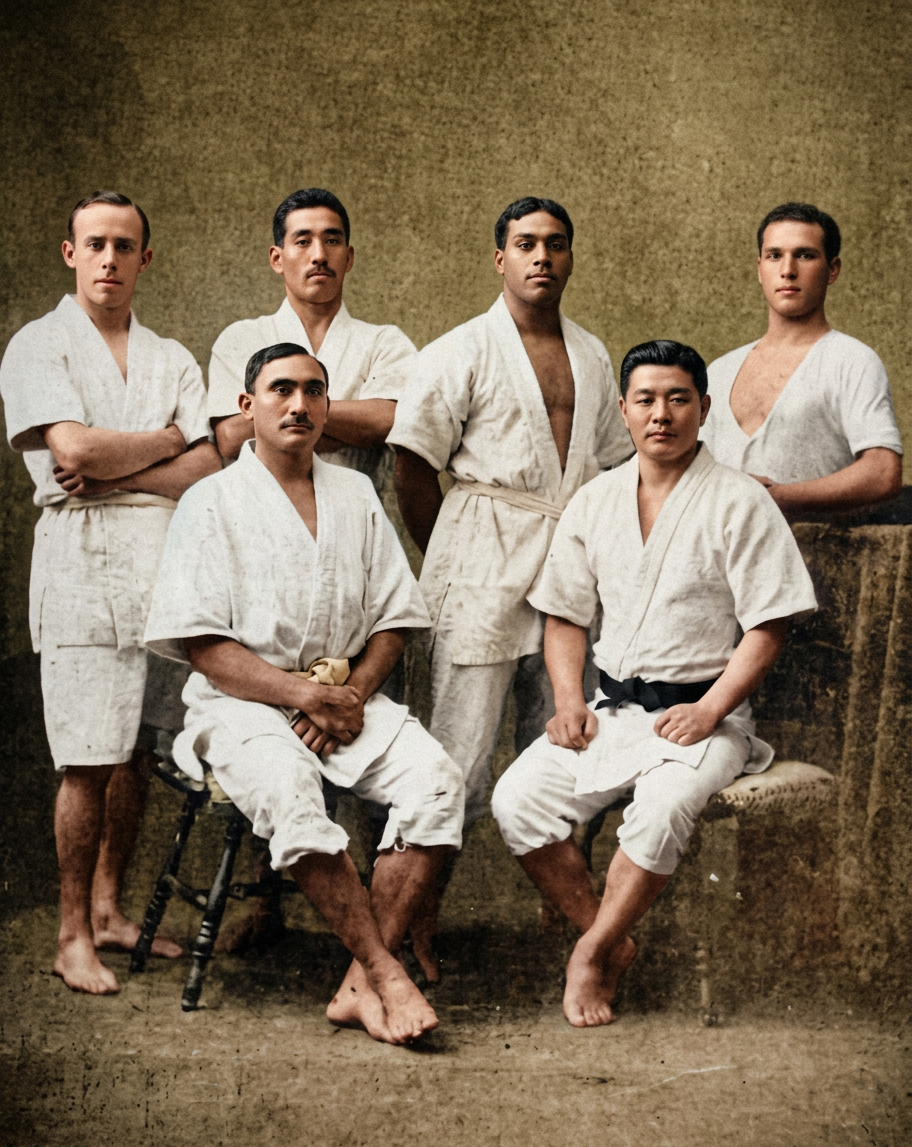
When Satake returned to Japan to support his homeland during World War I, as many others did, Maeda decided to remain in Brazil and take over Satake’s school as master. Among his students were several highly enthusiastic and diligent Brazilians who had attained a high level of skill under Satake and now assisted Maeda as instructors in Jiu-Jitsu classes.
One of them was Pires dos Reis, a young, ambitious man who held an important position within the National Police. He introduced Jiu-Jitsu to the police force and established one of the first training programs for police officers, which later became mandatory training throughout the country.
Pires also founded the first academy in Rio de Janeiro. In 1925, he was appointed head trainer for the police in that city. He, too, was not the first Brazilian to have founded a Jiu-Jitsu school in Rio. To assist him, he enlisted the young Gracie’s—Carlos, George, and Hélio—all three of whom had begun their training with him—and not with Maeda. George did not stay long in Rio, as he wanted to separate from the family, particularly from Carlos and Hélio, to go his own way. So he went to São Paulo, where he found a new mentor in Geo Omori, a Japanese Jiu-Jitsu and Wrestling expert, among others.
Hélio and Carlos, on the other hand, stayed with Pires. In 1936, they took over Pires’s school after he accepted a new teaching position in Fortaleza. Hélio and Carlos renamed their school the “Academia Gracie de Jiu-Jitsu.” In the mid-1940s, during World War II, Carlos got into trouble with the law and even had to leave Rio de Janeiro for quite some time. Rumors circulated, among other things, that he had fled to Argentina, where he supposedly met a nutritionist, and that upon his return he developed the “Gracie Diet.” However, there is no written documentation for this.
Hélio Gracie suddenly had to not only run the school but also provide for the large family, as my teacher Pedro Hemetério recalls. Carlos had a habit of always wanting a new young wife, and so it came to pass that he ended up with 21 children. Of course, he was not always the biological father of these children; rather, they were often brought into the family through his new marriages.
Since the school was running quite well under Hélio’s leadership, Carlos was now traveling all over Brazil. In Belém do Pará, he placed an ad in the daily newspaper, introducing himself as a Jiu-Jitsu expert and offering participants who completed the full course with him a position as a coach at his Jiu-Jitsu school in Rio de Janeiro. “Many came from different regions to take advantage of this opportunity,” recalls my master Hemetério, who also participated in this very intensive training at the time. “It lasted a year, and by the end, only two of us were left!” Pedro continued. In the end, Pedro not only received his black belt from Carlos Gracie but also the promised position at the school in Rio, working alongside Hélio Gracie.
Through the years of working together, Hélio and Pedro became very good friends, and the family welcomed him as “Uncle Pedro.” Carlos remained outside Rio de Janeiro, so the new patriarch, Hélio, began to forge his own path in teaching to attract more members. At that time, they developed the class program together, as they were essentially only giving private lessons in small groups.
The focus was on self-defense, as there were no Jiu-Jitsu sports competitions as we know them today. This only changed with the reestablishment of the Jiu-Jitsu Federation in Rio de Janeiro in the 1960s by Hélio Gracie, Hélio Vigio, and Pedro Hemetério. The lessons and techniques were structured so that students could learn the basic principles and adapt the techniques to their physical abilities, rather than memorizing countless techniques.
To further promote Jiu-Jitsu throughout the country, Hélio, Pedro, and the new generation of Gracie’s—including Rolls and Carlson—as well as non-Gracie’s like Ivan Gomes, who founded the school with Carlson on Copacabana, remained active. While Hélio was still fighting very intensively in the Vale Tudo ring on behalf of his family and Jiu-Jitsu, Pedro served as the head coach. And so it came to be that most of the new generation was trained by him.
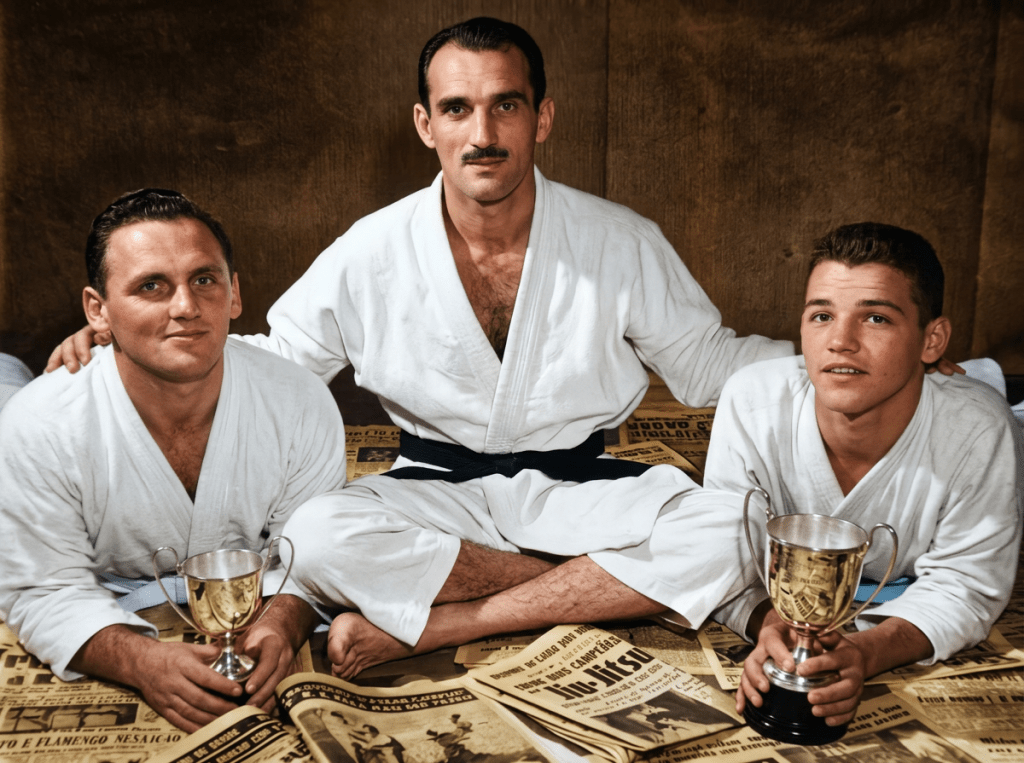
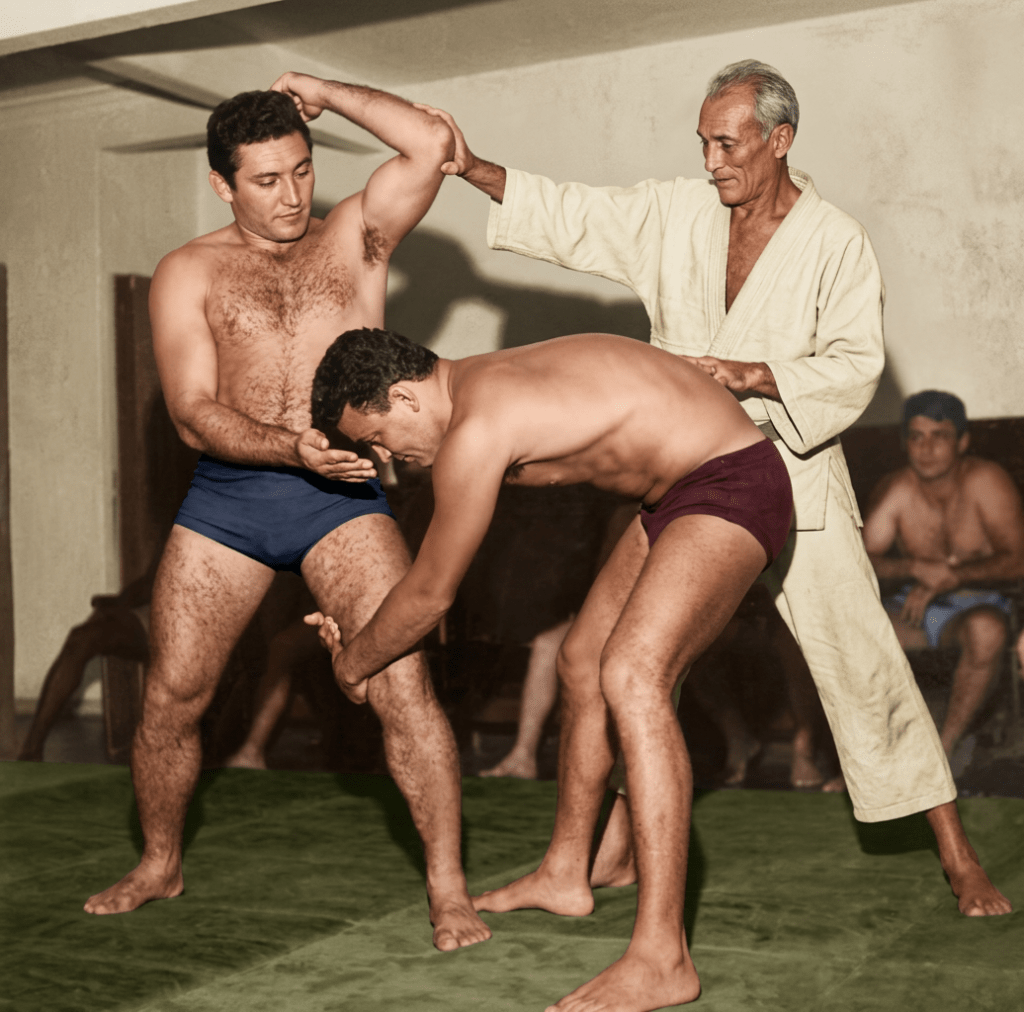
As George Gracie gained more students in São Paulo, his younger brother Hélio insisted that he return to Rio de Janeiro to help him. But George had worked hard to get where he was, so he chose to stay in São Paulo alongside Geo Omori. Hélio finally decided to have his own brother George face off against his top student, Pedro Hemetério, in a Jiu-Jitsu match. “I couldn’t go against Hélio’s decision because he was my master,” Pedro told me, “But I didn’t like the whole situation at all, because he was also Hélio’s older brother.”
So they finally faced off. Pedro had prepared well, while George believed he was the better fighter. But Pedro quickly won the match. That same evening, a group of interested people approached Pedro and asked him if he would now stay in São Paulo to teach his Jiu-Jitsu there. This group not only helped him find a place to teach but also provided him with an apartment, so he moved to São Paulo practically immediately and settled there permanently.
It wasn’t long before George Gracie’s school closed—since his own teacher, Omori, had also passed away—and so he returned to Rio, where, however, he never wore the kimono again. Professor Pedro’s school, on the other hand, became the official representative of Hélio Gracie Jiu-Jitsu in São Paulo. The connection to Rio de Janeiro, however, grew weaker and weaker , as the next generation there also had new plans for the future of modern (Brazilian) Jiu-Jitsu.
New schools sprang up throughout Brazil, some founded by the Gracie’s, some by their master students, and some by other lineages from the first and second waves of Japanese immigration. The (new) Judo from the Kodokan in Tokyo created further “competition.” But Kung-fu and Karate had also arrived in Brazil by then, so Vale-Tudo (MMA) fights were increasingly seen with fighters wearing white kimonos. The Japanese often referred to Jiu-Jitsu as “Brazilian Judo” to underscore their higher standing in society. In the meantime, however, Brazilian Jiu-Jitsu had already become so well-established and widespread that it was even practiced in Japan by top athletes in Wrestling and Grappling.
The Future – Here and Now!
As I have already described, the first Jiu-Jitsu association was founded in the mid-1960s in Rio de Janeiro (Guanabara). The founding members established the belt ranks, the weight classes for competitions, a simple scoring system, the match durations, and everything else. Thus, the first official tournaments took place, which were later also attended by numerous Judokas—though with little success.
Thus, BJJ developed into an independent and well-organized martial art. With the generational shift, when Carlos Gracie Jr. reorganized the federation in Rio and later established the International BJJ Federation (IBJJF), competitive BJJ experienced another boom in 1996, largely due to the success of Royce Gracie, the son of Hélio Gracie, in the UFC.
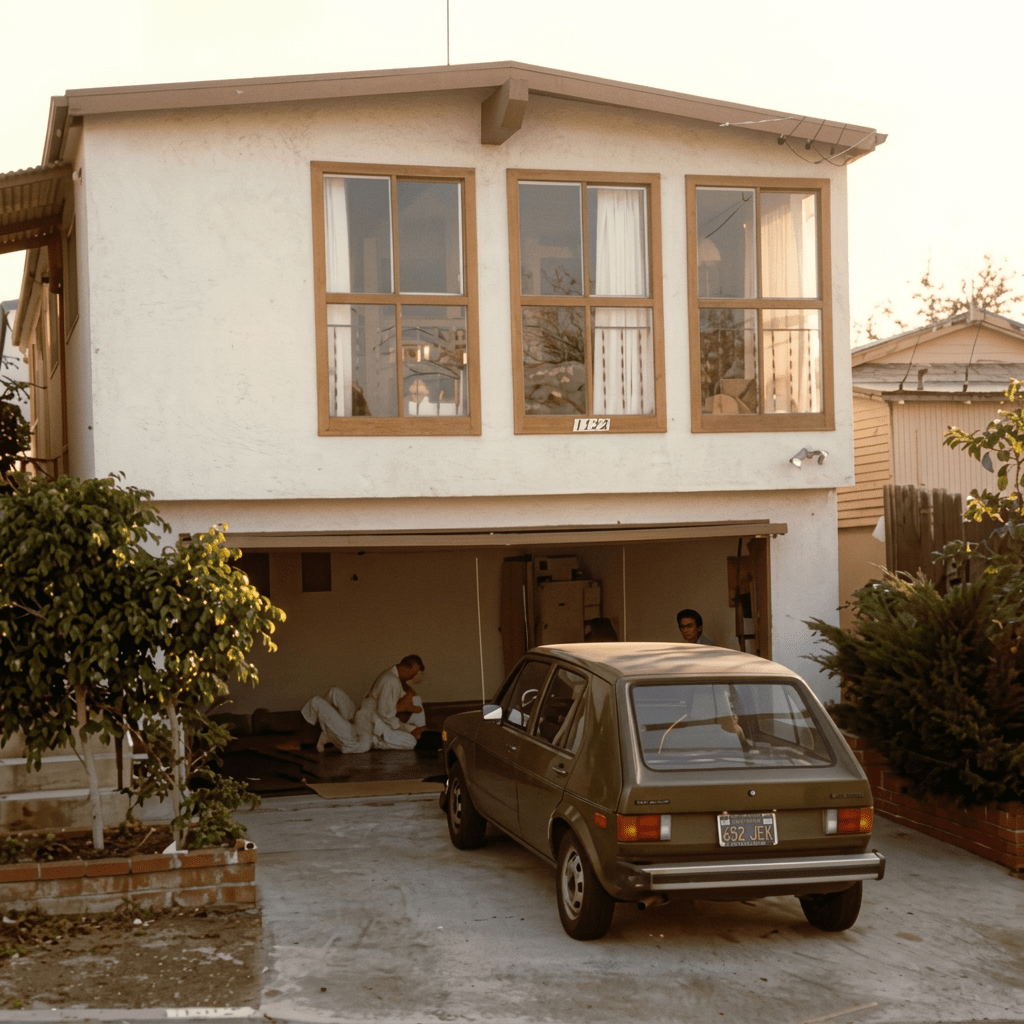
In the 1980s, one of Hélio’s older sons, Rorion Gracie, emigrated to the United States. After a brief stay in New York, he decided to travel to California to promote his father’s Jiu-Jitsu under the warm sun. But in California, he encountered significant resistance, as the Professional Karate Association (PKA) was well-established there with its strong schools and its own TV show. Through surfing, Rorion met various Brazilians. Through a friend who had also trained in Jiu-Jitsu in Rio, he managed to secure a double garage where he could lay out a few mats and thus give his first lessons.
That’s how the famous and very first Gracie Garage came to be, and with it, the spread of Gracie Jiu-Jitsu around the world. It wasn’t long before Rorion had a long waiting list of people eager to learn his Brazilian Jiu-Jitsu—me included. It also didn’t take long before Rorion founded the first official Gracie Jiu-Jitsu Academy in Torrance (Los Angeles). For all of us, this place became the main source of authentic BJJ in the 1990s.
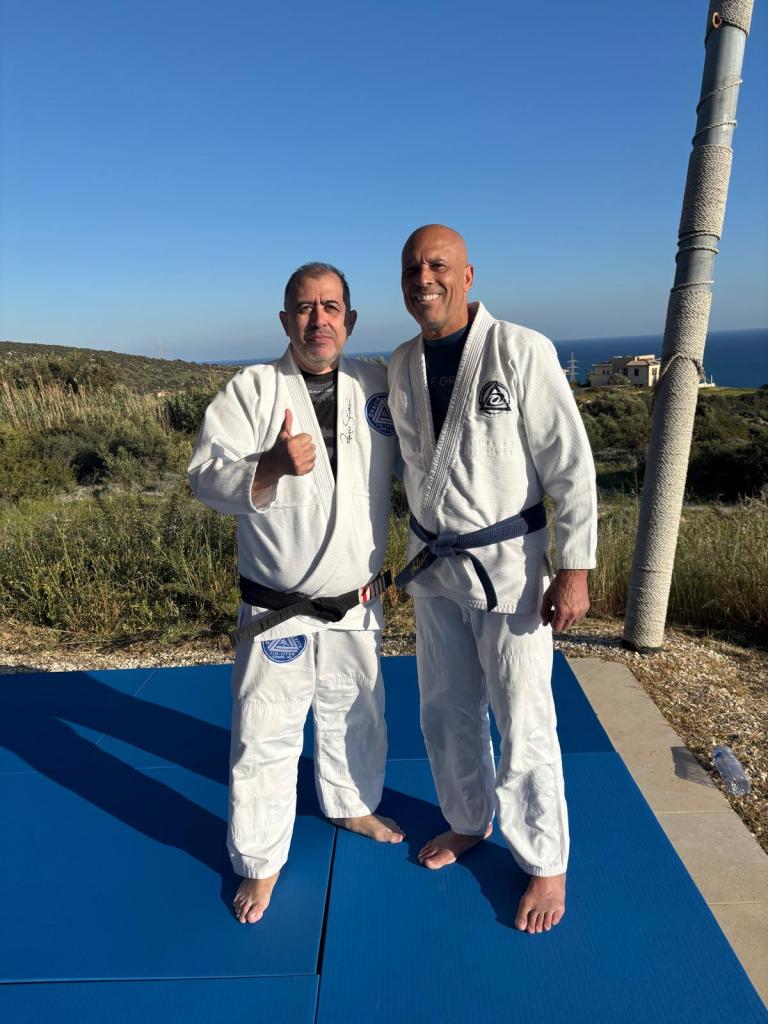
Since I trained at the Academy in Torrance at regular intervals from Switzerland (starting in 1991), I also took the opportunity to train with Rorion and, at the same time, with Royce. Occasionally, I was also on the tatami with others, though Royce became my main instructor—whether in private lessons or in the open classes that took place in the mornings and evenings.
It was not easy undertaking I had embarked upon, but I took learning Gracie Jiu-Jitsu very seriously from the very first moment. I also had a period, particularly between 1996 and 2004, during which we also engaged in BJJ sport competition. So I also trained alongside the Gracie cousins, the Machado brothers—especially with Rigan, John, and Roger. However, this remained a phase, because for me, the aspects of self-defense and physical fitness through Jiu-Jitsu were much more important.
When Royce Gracie stepped into the Octagon in the UFC, Vale Tudo (MMA) wasn’t that important to me, because I quickly realized that the Americans weren’t interested in Jiu-Jitsu, but in finding the next “Superman of martial arts.” Rorion sold the UFC again quickly, for a million dollars, they said. But we weren’t there for the UFC; we were there for Royce Gracie and Brazilian Jiu-Jitsu.
My Gracie Jiu-Jitsu hasn’t changed much in recent years, as I still consider myself a student of Royce Gracie. During the time I trained with Pedro Hemetério, I felt like I was starting over from scratch, even though I was already a recognized black belt running my own Jiu-Jitsu school in Zurich at the time. I would say that my GJJ career really began when I received my blue belt at the Torrance Academy.
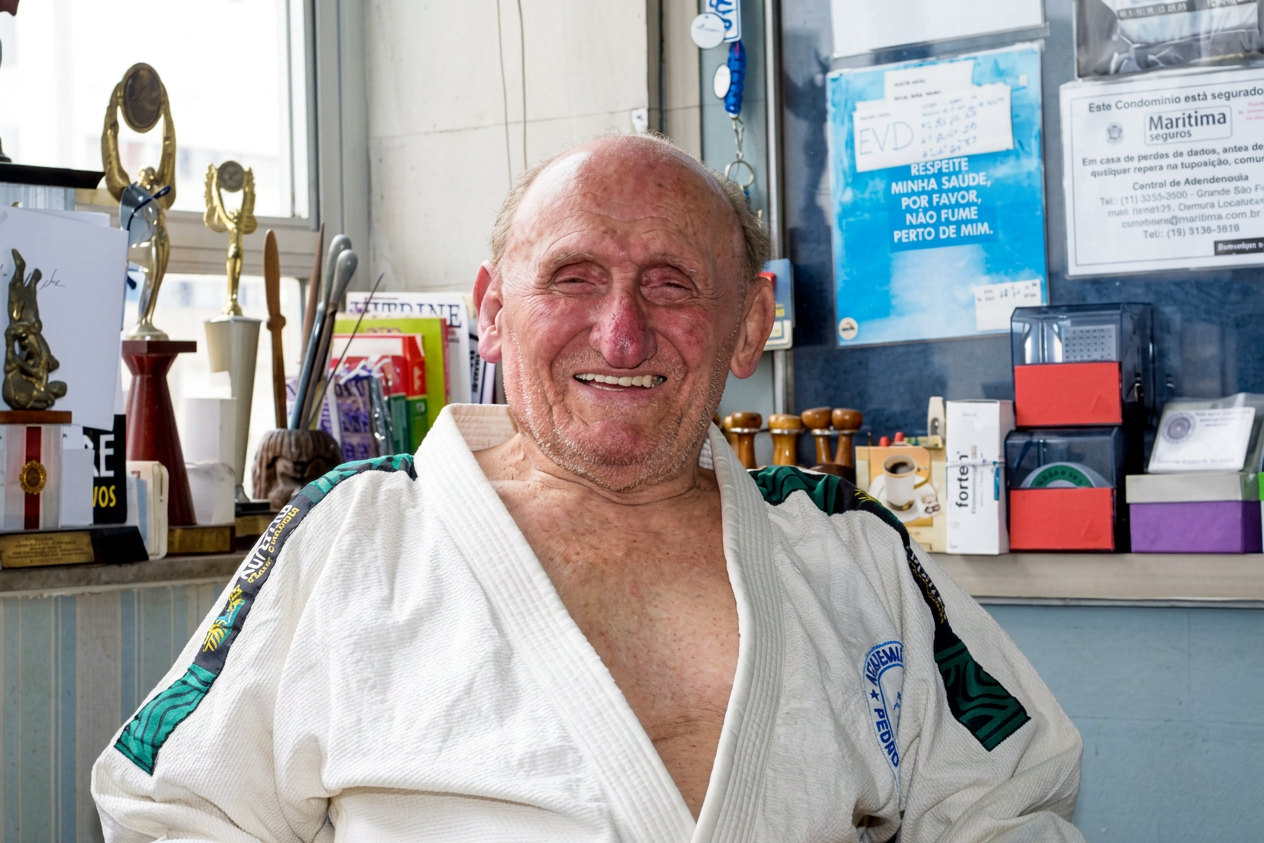
I ended up with Professor Pedro in São Paulo through Hélio Gracie, when I was training in Rio de Janeiro at Gracie Humaita under the Grandmaster himself and asked him where, in his opinion, I should go to train to become a good instructor. He then suggested here with my son Royler, in California with Rorion, or with Pedro Hemetério in São Paulo, which is where my journey subsequently took me.
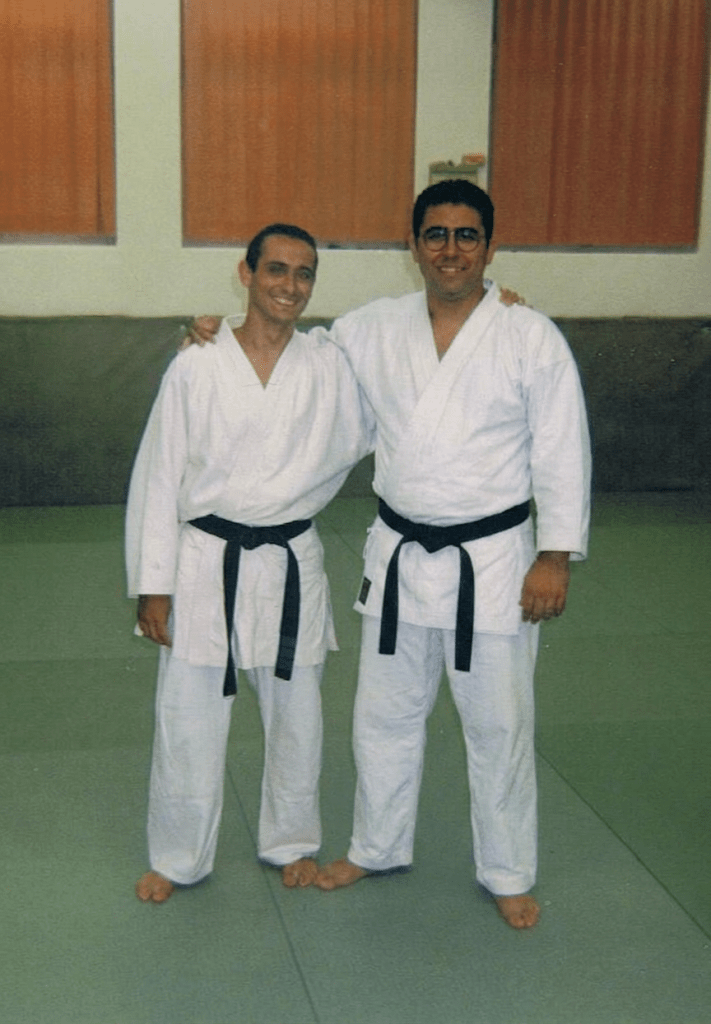
I knew it wouldn’t be an easy task to establish Brazilian Jiu-Jitsu in Switzerland—with the founding of my school in Zurich in 1995—and in Europe, even after I had built my own network a year later. I didn’t have to wait long for the first envious people and backstabbers to appear. Often, they even came from within our own ranks, because they weren’t given the attention they believed they deserved. These parasites are everywhere, including in every martial art or combat sport. They serve as a constant reminder that one should wear a clean Kimono to avoid being attacked by them.
The “GiE” project by Gracie Concepts® (Garages in Europe) is now an extension of our efforts to promote authentic BJJ in many regions. Starting your own school (Dojo) requires a significant investment: whether for your own training and continuing education as a trainer/instructor, for the Dojo itself with mats, changing rooms, and other infrastructure, or for ongoing rent, water, electricity, etc. That’s why this model exists, allowing you to quickly secure a training space where costs and effort remain relatively low and manageable.
Thanks to my new Gracie Concepts® Online University, I can offer future and active trainers/instructors a first-class curriculum, so they have a solid and well-structured teaching program. Starting at the brown belt level, there is also the opportunity to go beyond this, and thanks to a program called “Alternatives,” the Jiu-Jitsu-kas gain additional expertise from our GJJ family. In fact, while we propose a teaching method, we do not necessarily require it to be followed 1:1, as the needs of my members/students are not the same as those of my BJJ colleagues in the U.S., the U.K., or Germany. It is important, however, that the basic principles are not violated, as otherwise one is not teaching Gracie Jiu-Jitsu, but rather a “custom” Jiu-Jitsu.
Many people think they’re doing BJJ because they train in Wrestling, learn a few Jiu-Jitsu submission techniques, and throw in a few Judo throws. But that’s not the case! What they’re doing is a “mix of…,” and in my opinion, that has nothing to do with BJJ. If that were the case, every Krav Maga instructor could claim to be a BJJ black belt or BJJ instructor because they also train in Wrestling, Judo, and KM—since KM also includes some grappling. But it’s certainly not that simple!
In the coming months, I’ll be writing a few more lines about our Gracie Concepts® GiE project. I’m also happy to answer any questions at any time if anyone would like to learn more. The easiest way to reach me is through the new website: www.graciegarage.com/blog.
Further information about the Gracie Concepts® Network can still be found on the website www.graciejiujitsu.eu, and at www.graciezuerich.ch there is more information about our Gracie Jiu-Jitsu in Zurich.
I always appreciate your feedback.
– Franco Vacirca
 Gracie Concepts - Garages in Europe